Top 10 Ways To Assess The Compliance Of Regulatory Requirements For PAT in Warwickshire
The UK regulatory environment for Portable Appliance Testing(PAT) is fundamentally unique from the prescriptive regulations governing fixed electric installations or fire-safety equipment. Unlike fire extinguisher servicing, which operates under specific British Standards and third-party certification schemes, PAT testing is governed by a broader health and safety framework that emphasizes risk assessment and duty of care rather than mandatory periodic testing schedules. Electricity at Work Regulations 1988, which states that electrical equipment must be maintained for safety purposes, is the main legal requirement. However, the Regulations do not specify how this maintenance should be achieved, nor do they mandate a specific testing frequency or methodology. The duty holder (typically an employer) is responsible for conducting a risk assessment that is sufficient to determine a maintenance and inspection schedule. Compliance, therefore, is not evidenced by a stack of test certificates alone, but by a demonstrable process of risk-based decision-making, competent implementation, and thorough documentation that proves a systematic approach to ensuring electrical safety in the workplace.
1. Electricity at Work Regulations: 1989
Regulation 4(2) is the cornerstone of compliance for PAT testing. This states: As may be required to prevent harm, all systems are to be maintained so that they can be prevented, as far it is reasonable practicable. It is an absolute obligation on the part of employers and duty holders to maintain their electrical equipment. The term "systems", which includes portable devices, is used. Crucially, the regulations do not mention "PAT testing" specifically; they mandate "maintenance," which is a broader concept encompassing visual inspection, user checks, and combined inspection and testing. The risk assessment determines the frequency and type required of maintenance, not a set legal schedule.
2. The Health and Safety at Work Act, 1974 Act 1974
The Health and Safety at Work, etc. The main law that establishes what employers owe to their employees is the 1974 Health and Safety Act. As per section 2 of Act 1974, employers have to ensure health, safety and welfare for all employees, as far it is reasonable. It also includes the provision of safe electrical equipment and work systems. Section 3 extends this duty to persons not in their employment, such as visitors, contractors, and members of the public. PAT tests are a great way to ensure electrical equipment safety.
3. Code of Practice of the IET for Electrical Equipment In-Service Inspections and Testing: Guidance and Best Practice
Although not law, the Institution of Engineering and Technology Code of Practice (IET Code of Practice) is universally recognized as the benchmark of best practice for PAT tests. It includes detailed instructions on how to implement a maintenance program that is compliant, including:
Definitions of appliance categories and types.
Detail procedures for visual inspections, combined inspections and tests.
Initial recommended frequency for inspections and tests based on the equipment type and operating conditions.
Results of tests are graded on a pass/fail basis.
Courts and Health and Safety Executives inspectors will use the code to determine whether or not a dutyholder’s regime of maintenance is "suitable and sufficiently." Deviation from the code without a robust, documented risk-based reason can be seen as a failure to comply with the overarching regulations.
4. Risk Assessment Priority
HSE advocates an approach based on risk for PAT testing. This is a departure from the outdated idea of annual blanket testing. A risk assessment must be carried out by the dutyholder to determine if inspections and tests are necessary. A number of factors will influence the assessment.
Equipment type. A Class I appliance, in a workshop or low-risk environment, may require regular formal testing.
Environment: Construction sites and warehouses are high-risk environments. Offices and hotels have a lower risk.
Equipment users: Are they trained staff members or the general public?
Previous history: Is the appliance new or frequently damaged?
This risk assessment is what defines a compliant system, not the number of tests performed.
5. The Concept of Competence for Testers
Regulation 16 (Electricity at Work Regulations, 1989) requires that all persons working on electrical systems possess the necessary knowledge and experience in order to avoid any danger. The "competence" required for PAT testing does not require formal qualifications, but the tester should have:
Adequate knowledge of electricity.
They should have a good understanding of their system and some practical experience.
Understanding the hazards to be aware of and what precautions are needed.
Ability to correctly use the test equipment and interpret the results.
City & Guilds is a popular qualification and provides excellent training. However, you can achieve competence through other methods. The dutyholder has to be able demonstrate that the individual conducting the test is competent.
6. Documentation and Records-Keeping Requirements
The Electricity at Work Regulations (EWR) do not specifically require recording. Regulation 29 says that it's a defense to prove you did everything possible and took due diligence in order to avoid the offence. Comprehensive records are the primary evidence of due diligence. A compliant record-keeping system should include:
Asset register for equipment
A record of the risk assessment and the resulting maintenance plan.
Reports for each inspection and test including the appliance description, results of tests, pass/fail status and date of next testing.
The HSE or local authorities must have easy access to these records.
7. Labelling and identification of appliances
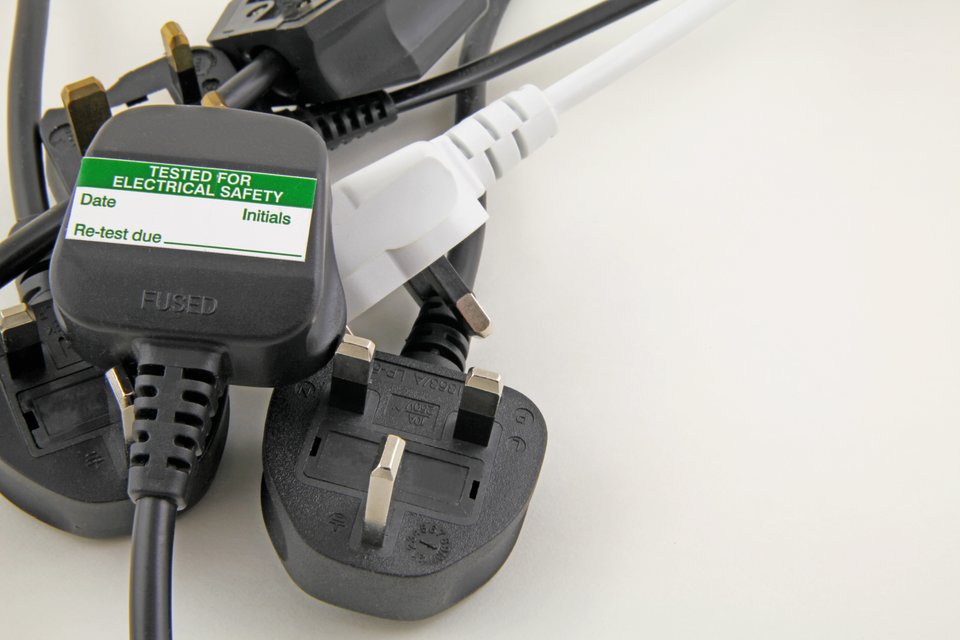
Effective labelling plays a crucial role in a compliant PAT. Each appliance that has undergone a formal combined inspection and test should be labelled with:
Unique asset identification number. This identifies the asset and its record.
The test date.
Date for next test (or inspection).
The name of the tester or its identifier.
The label is a visible indicator that shows users and inspectors the compliance status of an appliance. Labels are durable, non-metallic and non-conductive.
8. The HSE Enforcement Position and "Myth-Busting".
The HSE is actively working to dispel misconceptions surrounding PAT tests. They insist that:
No legal requirements exists for equipment to be tested annually.
If a business has qualified staff, it can perform its own testing. It's not required to use a contractor.
Visual inspection is more important than electronics testing, and can detect the majority faults.
An enforcement officer may look for a method based on risk. A company that tests its equipment without any support in the form of a risk assessment will be seen as less favourably by an enforcement officer than one who can demonstrate a more robust risk assessment and justify a longer interval between testing for equipment with low risks.
9. Interplay with Other Legislation: PUWER 1998
The Provision and Use of Work Equipment Regulations (PUWER), which was passed in 1998, also apply to portable appliances. PUWER specifies that the work equipment used must be appropriate for its intended usage, maintained in a state of safety, and inspected periodically to ensure its safety. Regulation 6 requires inspections when safety depends on installation conditions. The PUWER inspection and maintenance regulations for electrical work equipment are met by PAT testing, which is a critical method.
10. Insurance implications and due diligence
While insurance companies have certain requirements, the law bases its assessment on risk. The policy may stipulate that the PAT test is performed annually by a reputable third party. If this condition is not met, it could invalidate any claim. Furthermore, in the event of an electrical incident, the dutyholder's PAT testing records and risk assessment will be the first documents scrutinized by insurers and HSE investigators. The best evidence for due diligence is a well-documented and risk-based management system. This will also provide a strong defense against prosecutions or invalidated insurance claims. Follow the top rated Warwickshire electrical testing for site advice.
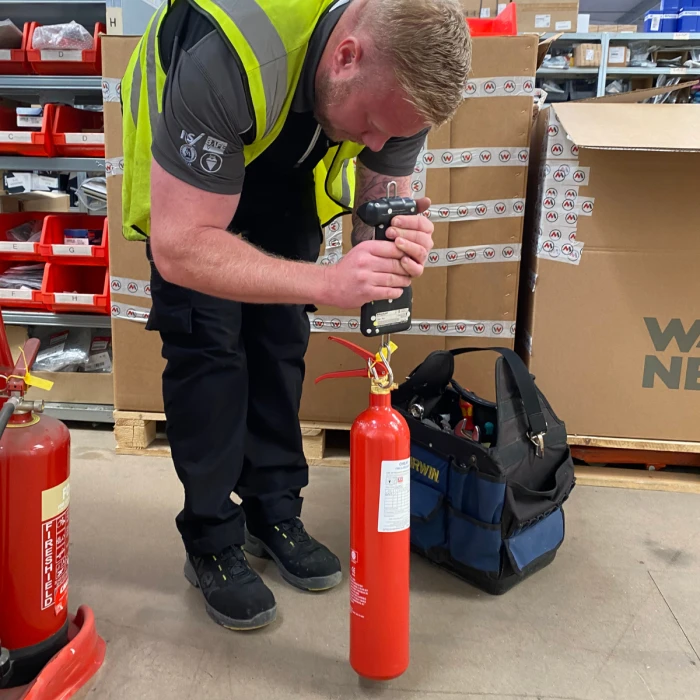
Fire Extinguisher Servicing – Top 10 Tips in Warwickshire
When selecting the best UK provider to service your fire extinguishers you need to be looking for more than a company who will perform an annual inspection. Comprehensive companies act as a single point of contact to manage the entire range of fire protection equipment. They provide an integrated range services that reduce administrative burden and provide the complete solution. The range of services offered is a clear indicator of the experience and expertise of a company and their dedication to becoming an established partner rather than just a contracting company. Understanding the entire spectrum of services available beginning with risk assessment installation, ongoing maintenance, to the support needed in an emergency and disposal at end-of life it allows you to make informed decisions that deliver both safety and efficiency.
1. Routine Maintenance and Scheduled Services: This is a core offering that strictly adheres to BS 5306-3. Full-service providers will manage all scheduled times: monthly visual checks (often controlled and supported by your), the annual basic service that is required for all extinguishers; extended service (discharge tests) for models of foam, water and powder every five years as well as the CO2 overhaul test every 10 years. These visits should be planned ahead of time, and with complete certificate for each.
2. The service also includes the fitting of new equipment. A reputable company does not just maintain but also offers advice on the best equipment. This involves conducting a thorough survey of the site to determine how many sizes, how many, and what rating extinguishers will be required. The type of extinguishers required is determined by the fire risk assessment as well the specific hazards in the area (e.g. Electrical Class B, Class C or A). The service consists of an on-site survey to determine the proper type, size, rating and number of extinguishers based on your fire risk assessment and the premises' specific hazards (e.g. Class A B C, F, electrical).
3. Fire Risk Assessments (FRA) – Many leading service providers employ assessors who have been certified to conduct or review the legally-required Fire Risk Assessment. While this is an independent procedure, letting your extinguishers providers participate or complete the FRA will allow for a fully integrated strategy in which the equipment used is directly compatible with the risk identified. This creates a track for auditing from hazard recognition to control measures' implementation.
4. Emergency call-out and reactive maintenance: Equipment could be destroyed, stolen, or discharged accidentally at any time. A reputable company will provide emergency callout services that will quickly repair or repair your equipment. This ensures your premises are never left in a state of non-compliance or unprotected for longer than it is required. This includes replacing damaged or lost equipment.
5. Other Fire Equipment Servicing – Your fire safety strategy is not limited to the use of portable extinguishers. A full-service company can also maintain and certify your other equipment, creating an all-inclusive, manageable contract. This can include fire blankets hose reels and fire alarm systems emergency lighting, and dry or wet risers. This method of combining provides the sameness, eases paperwork, and is usually cost-effective.
6. Services for training and education The only way to ensure that the people using it know how to operate it, will equipment be efficient. Numerous providers provide additional training services. They offer extinguisher-training classes (often involving live-fire simulations) in addition to classes for fire wardens as well as fire safety awareness. This helps your employees, enhances overall safety, and also demonstrates your commitment to comply.
7. Comprehensive Documentation Online Portals. The need for robust records is required to be maintained by the law. Not only documents on paper, but advanced documentation is offered by the top companies. This includes digital service reports that are detailed with asset registers and online portals that permit you to see your complete service history and download your certificates.
8. Disposal & Environmental Services: The responsible disposal of extinguishers decommissioned under Duty of Care is a significant environmental and legal requirement. A full service provider will handle this task efficiently. They will use licensed waste carriers to dispose of the extinguishers, and provide Waste Transfer Notes that prove legal and safe disposal. Avoid the high fines associated improper disposal pressurised vessels or hazardous materials.
9. Planned Preventative Management and Asset Management. Beyond reactive services, the top companies offer proactive PPM plans. They manage the entire portfolio of assets and track all due dates across various kinds of equipment, proactively scheduling visits, and supplying the user with a clear and forward-looking maintenance schedule. They take care of any administrative burdens and can rest certain that you won't skip a service.
10. Consultancy and Compliance Auditing: For larger or more complex sites, experts can provide consultancy services. This could include conducting a gap analysis of your current fire safety policies in relation to legal requirements, providing advice on plans for remediation and conducting ongoing compliance auditing to provide you with peace of mind that your whole fire safety strategy is robust, documented, and effective. Follow the recommended Warwickshire fire safety for site tips.